Has the work been measured end to end?
Include edge cases, quality, throughput, escalation, and the work people do between documented steps.
Pressure-test measured task performance, operating safeguards, and fully loaded economics. The result is not permission to lay people off. It is a clearer standard for what must be proven first.
Start assessmentScore what is known today, not what a vendor deck promises. Use a lower score when evidence is partial, safeguards are informal, or a cost is missing.
Include edge cases, quality, throughput, escalation, and the work people do between documented steps.
Count monitoring, fallback paths, security controls, review queues, and recovery under real operating load.
Score named ownership, decision rights, customer recourse, auditability, and the people required to supervise the system.
Compare the current team cost with the program cost, including the human oversight, transition work, and failure exposure that optimistic models often omit.
The economic case is positive, but Accountability is below the evidence threshold. Close that gap and run a monitored pilot before making a permanent staffing decision.
A score should point to observable proof. These prompts turn a vague AI claim into a reviewable operating record.
Prove the system can handle the whole job, not a polished slice.
Show how the organization detects and recovers from failure.
Include every cost needed to keep the system useful and accountable.
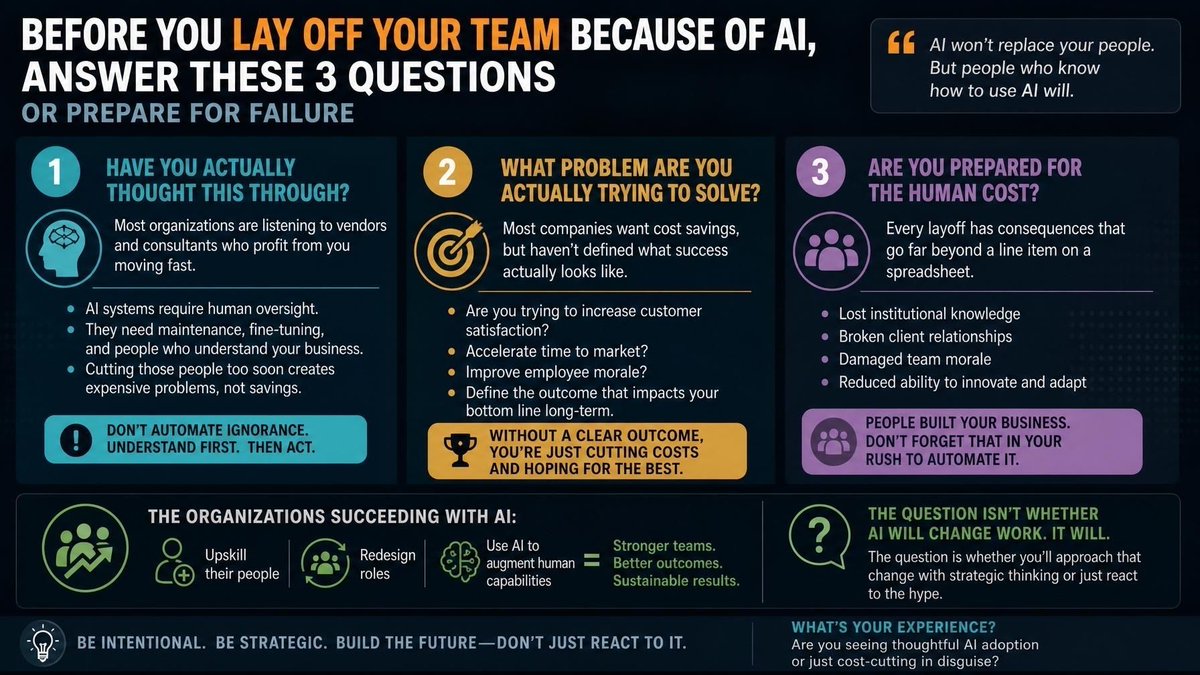
“A model result is not an operating model.”
Separate a successful AI demonstration from the full system of measurement, accountability, and recovery required to run the work.
Your memo captures the assumptions, math, weakest check, and next actions in a format a leadership team can review together.