Current position
Rest: upside down
Hanging places the bat in a position where takeoff can begin with a release.
A bat's small size helps keep gravity from sending too much blood toward its head. Resting upside down also puts takeoff one quick release away.
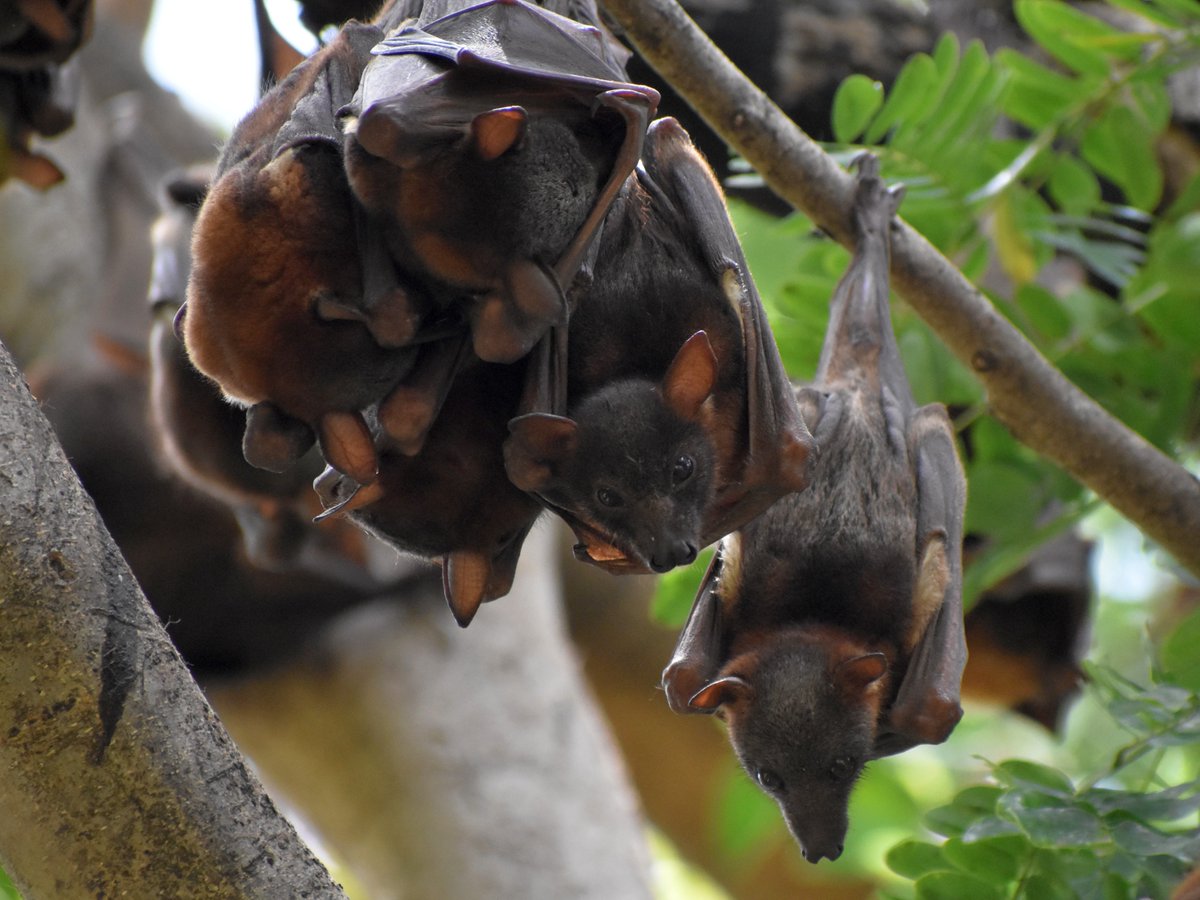
Choose a body-size context, then move the bat from rest to release to flight. The comparison is conceptual and stays within the observation described in the source post.
Hanging places the bat in a position where takeoff can begin with a release.
The source explains that a bat's small size keeps gravity from sending too much blood rushing toward its head.
This is an explanatory comparison, not a physiological calculator or medical model.
Small size and an upside-down resting position work together: one limits the rush described in the post, while the other supports quick takeoff.
Your field note records the selected size context, launch phase, and source-grounded observation.