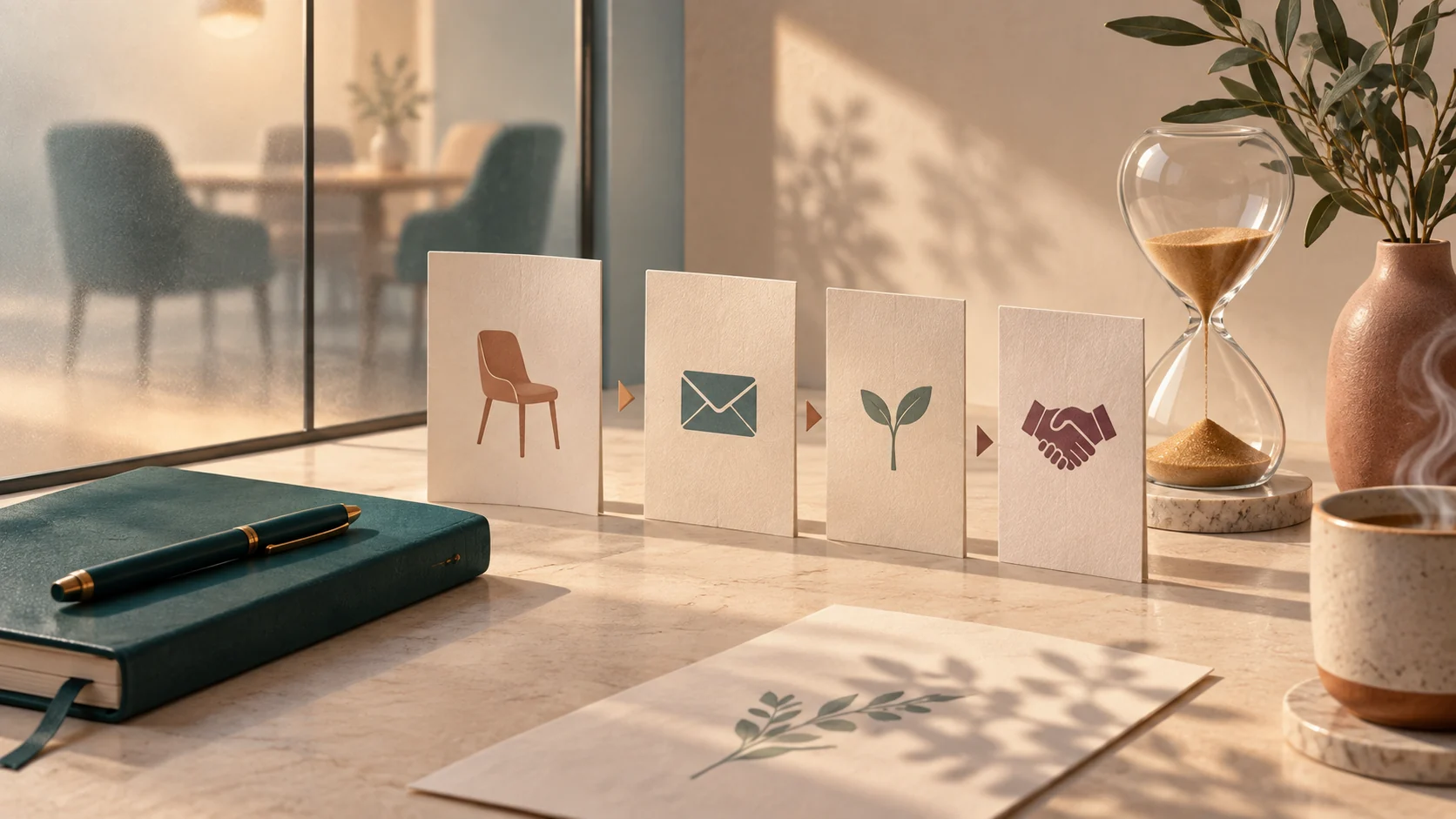
The Three-Phase Follow-Up Cadence
Following up after an interview is not an imposition; it is an expected part of professional communication. Desperation is signaled not by the fact that you follow up, but by the frequency, urgency, and emotional charge of your messages. A calm cadence protects your dignity while keeping your candidacy visible.
Hiring managers and talent recruiters recommend a simple three-step rhythm:
- Phase 1: The gratitude note (within 24 business hours). Send a brief thank-you message to each person who interviewed you. Confirm your interest, thank them for their time, and refer to one concrete detail from your conversation.
- Phase 2: The timeline check-in (5 to 7 business days later, or 1 day after a promised deadline). If the hiring manager stated you would hear back by Friday, do not reach out on Thursday afternoon or early Friday morning. Wait until Monday morning. If no deadline was mentioned, wait five full business days before your first check-in.
- Phase 3: The graceful wrap-up (7 to 10 business days after Phase 2). If your milestone check-in goes unanswered, send one final, polite note. Inquire about the role while acknowledging that their hiring plans may have changed. After this third note, pause your outreach entirely.
Why Language Matters: Desperate vs. Professional Phrasing
When candidates feel anxious, their writing often reflects that tension through over-explaining, self-deprecation, or subtle guilt-tripping. Hiring managers easily recognize the difference between genuine professional interest and urgency driven by panic.
| Desperation-Leaning Message | Calm Professional Alternative | Why the Change Works |
|---|---|---|
| "Just checking in because I haven't heard anything and I am really hoping for good news soon!" | "I am writing to check on the hiring timeline for the role and to reiterate my interest in joining the team." | Removes personal anxiety and treats the hiring process as an operational business decision. |
| "I have another offer pending so I need an answer right away if you want me." (When unverified) | "I have received another inquiry with an approaching decision window, but your team remains my top choice if you have an updated schedule." | Factual, respectful, and avoids issuing manufactured ultimatums. |
| "Did I say something wrong in our interview? Happy to clarify anything you had doubts about." | "I enjoyed discussing your quarterly targets. Please let me know if any additional work samples would assist your evaluation." | Projects quiet confidence rather than soliciting reassurance. |
Inside the Hiring Delay: Why Teams Take Longer Than Promised
When an employer goes silent for two weeks, candidates frequently assume rejection. In reality, silence during a hiring round is usually administrative rather than personal. According to general guidance on workflow and project planning, cross-functional sign-offs introduce unexpected variance.
Common internal bottlenecks include:
- Executive scheduling conflicts: A key stakeholder needed for final sign-off is traveling, sick, or handling an operational incident.
- Budget reassessments: Department leaders may need to adjust salary bands or review headcounts with finance before an official offer letter can be drafted.
- Parallel candidate tracks: The company may be finishing first-round interviews with out-of-town candidates to ensure equitable evaluation across the pool.
- Offer negotiations with a first-choice finalist: Teams often keep runner-up candidates active in case negotiations over compensation or start dates fall through.
Understanding these practical constraints helps you avoid reading rejection into every quiet week.
Practical Guide to Crafting Each Message
To keep your notes fresh, anchor each message in practical value rather than repetitive inquiries. Here is how to structure each touchpoint:
1. The Same-Day Note
Keep this note between three and five sentences. Mention a specific idea or technical challenge the interviewer raised. This confirms you were actively listening and distinguishes your note from generic templates.
2. The Mid-Process Check-In
Open with a polite greeting, mention the role title clearly in the subject line, and ask directly for a schedule update. You can include a link to a published article or relevant project you completed that relates to your conversation, presented as a casual resource rather than homework for the reader.
3. The Clean Break
If you receive no reply to your second inquiry after another week, deliver a final, courteous message. Express goodwill, leave the door open for future networking, and mentally archive the application. Relentless messaging after this point only damages your reputation for future openings.
Common Post-Interview Follow-Up Mistakes
Even well-intentioned job seekers make missteps that diminish their standing. Avoid these common blunders during the waiting period:
- Switching channels without invitation: If your communication took place over email, do not suddenly send direct messages on personal social media, text private cell numbers, or call the recruiter's desk unprompted.
- Mass-emailing the entire interview panel: Send individual, distinct notes to each person who spoke with you. Putting all five interviewers on one collective thread looks rushed and discourages candid replies.
- Sending daily check-ins: Following up every two or three days conveys impatience and signals that you may struggle with self-direction in autonomous roles.
- Stopping your broader job search: The most dangerous mistake is pausing applications because an interview felt promising. Keep applying and interviewing until you have a signed offer letter. Maintaining search momentum is the ultimate safeguard against interview fatigue.
Managing Your Search Pipeline with Super
When you are interviewing across multiple companies simultaneously, tracking interview dates, personalized discussion points, and follow-up deadlines in your head quickly becomes chaotic.
Super enables you to build custom, hosted personal workspaces that keep your job hunt organized. Instead of juggling scattered notes across browser tabs, you can use Super's sandboxes and automated browser tools to gather company research, store tailored drafts, and monitor application timelines in one place. With hosted MCP capabilities, a desktop client, and cloud-backed sandboxes, Super allows job seekers to turn unstructured interview notes into organized, actionable schedules without relying on cumbersome manual spreadsheets.
Common questions
How long should I wait to follow up if they gave no specific timeframe?
Wait five full business days after your interview before sending your first status inquiry. This gives the interview panel sufficient time to gather internal feedback without feeling pressured.
Is it okay to follow up by phone or LinkedIn instead of email?
Always default to the communication channel where the recruiter or coordinator originally arranged your interviews. Unless an interviewer explicitly invited you to call or connect on LinkedIn, stick to professional email.
What if an interviewer never replies to any of my follow-ups?
If you have sent a thank-you note and two subsequent check-ins across two to three weeks with zero response, treat the role as closed and redirect all energy toward active opportunities. Continued messaging will not change the outcome.
Should I send a thank-you note after an initial 15-minute phone screen?
Yes. A brief, two-sentence email thanking the recruiter for their time and expressing continued enthusiasm for the next round is standard and appreciated.
Editorial note: Super publishes this guide. Topic research includes Folk’s article on this topic. This is an independently written guide, not an affiliation or a tested product ranking. Product capabilities can change; review current documentation before choosing a service.